

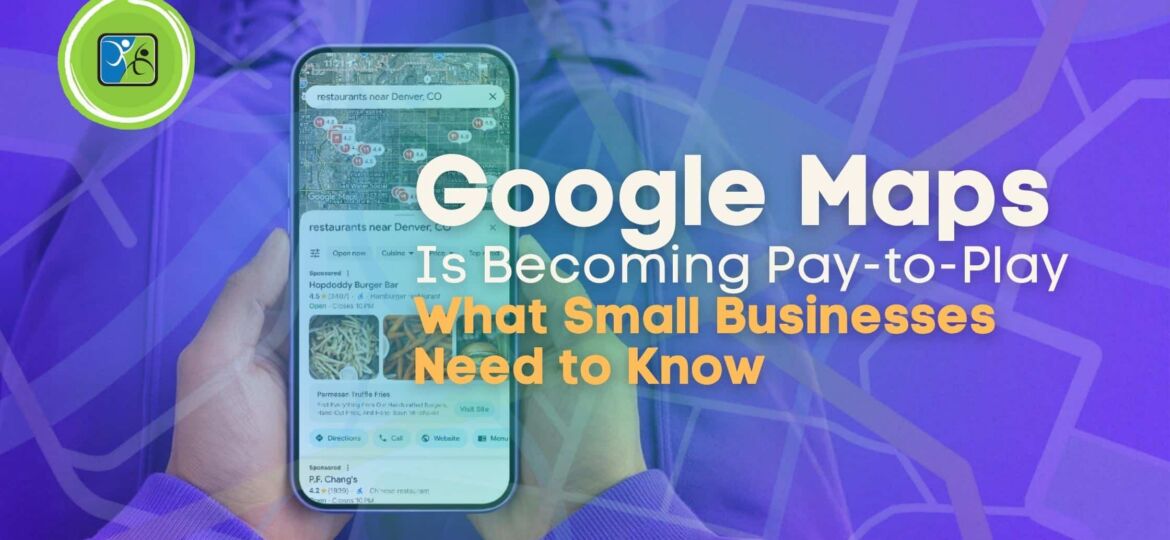
Something shifted in local search over the past few months, and if you run a small business in Denver, there’s a good chance you’ve felt it, even if you couldn’t name it.
Maybe your phone has been a little quieter. Maybe the quote requests have slowed. Maybe you pulled up a Google search for your own service category and noticed something that made your stomach drop: sponsored listings. Lots of them. Right where your business used to be.
You’re not imagining it. You’re not being paranoid. And you’re not alone.
Google has been quietly, and rapidly, converting the Local Pack, one of the last remaining pieces of truly organic real estate in local search, into a paid advertising environment. For small businesses that have relied on organic visibility to generate leads, this is one of the most significant changes to local search in over a decade. And most business owners have no idea it’s happening.
This post breaks down exactly what’s changed, what the data shows, why Google did it, and, most importantly, what Denver small businesses can actually do about it.
What Is the Google Local Pack (And Why Did It Matter)?
Before we get into what changed, it helps to understand what we’re talking about.
When you search for a local service on Google, “Denver web designer,” “plumber near me,” “chimney sweep Denver”, you typically see a map with three business listings below it before any traditional blue-link organic results appear. That’s the Local Pack, also called the Map Pack or the 3-Pack.
For years, the Local Pack was the crown jewel of local SEO. It was prominently positioned, visually dominant, and, crucially, it was organic. You earned those spots through your Google Business Profile, your reviews, your citations, your local relevance. You didn’t buy your way in. A well-optimized small business could compete head-to-head with a larger competitor that had a bigger ad budget, simply by doing the work.
The Local Pack captured an estimated 44% of all local clicks on page one of Google. It was, in many ways, the great equalizer for small businesses.
That era is ending.
What Google Has Actually Changed
Here’s where the data gets striking.
According to tracking data from Places Scout, a platform that monitors local search results across more than 1,200 mobile ranking reports, local pack ads appeared on less than 1% of tracked keywords in May 2025. By January 2026, that number had climbed to nearly 22%. That’s a 733% increase in roughly eight months, with the sharpest acceleration happening between November 2025 and February 2026.
Joy Hawkins, one of the most respected local search consultants in the industry, documented the surge in real time on social media in early February 2026: “Just had Places Scout re-run the data to see how this looks in January so far. The increase isn’t slowing down yet.”
It hasn’t.
But it’s not just a number going up. The structure of local search results has fundamentally changed. As of early 2026, a typical local commercial query in a competitive market can now show multiple paid layers before a single organic result appears:
Layer 1: Local Services Ads (LSAs): These appear above everything else for qualifying service categories, roofing, HVAC, legal services, home cleaning, and others. These are pay-per-lead ads that show the “Google Guaranteed” or “Google Screened” badge. They’ve been around for a few years but have expanded significantly in available categories.
Layer 2: Standard Sponsored Text Ads: Traditional Google Ads, now grouped under a persistent “Sponsored results” header that was standardized globally in October 2025. Google also added a “Hide sponsored results” toggle, but let’s be real, most users don’t know it’s there.
Layer 3: Sponsored Listings Inside the Local Pack: This is the newest and most disruptive change. Paid listings now appear inside the Local Pack itself, the same three-slot map unit that businesses used to earn organically. In competitive categories like home services, legal, and medical, the top results in the Local Pack are now sometimes entirely paid.
Layer 4: “Sponsored Options in the Area” Panel: Google has also been testing an image-forward card unit that appears as a separate sponsored block, featuring multiple local businesses with photos and reviews, all paid placements.
Layer 5: Ads at the Bottom of the Local Pack: In a particularly aggressive test that surfaced in June 2025, Google began showing sponsored listings at the bottom of the Local Pack as well. Not just at the top, at the bottom too. The organic middle is being squeezed from both ends.
When you add this all up, a small business that was once showing up prominently in local search through purely organic effort may now be sitting in position four or five on the page, below multiple paid layers, even with a well-optimized Google Business Profile and strong reviews.
Why Is Google Doing This?
The honest answer is: because it works, and because their revenue model demands it.
Google’s advertising business is under pressure. AI-powered search tools are siphoning off informational queries. Zero-click searches, where users get their answer directly from an AI Overview without clicking anything, now account for more than half of all Google searches in the United States. That means fewer clicks, fewer opportunities to serve ads, and downward pressure on revenue per query.
The local search results page, however, is different. Local searches have commercial intent. Someone searching “Denver web design agency” or “roof repair near me” is likely to call, visit, or request a quote. That’s valuable. Google knows it’s valuable. And they’re increasingly pricing it accordingly.
There’s also a competitive dynamic at play. Local Services Ads, Performance Max campaigns, and now local pack placements give larger advertisers with substantial budgets the ability to dominate local search in ways that were simply not possible two or three years ago. The playing field is tilting.
What This Means for Denver Small Businesses
If your business has relied primarily on organic local search to generate leads, no paid advertising, just a solid Google Business Profile and good SEO, the message is uncomfortable but important: your visibility in local search is at risk, and it’s going to require a strategic response.
This doesn’t mean organic SEO is dead. Far from it. But it does mean that organic alone is no longer sufficient for businesses in competitive local categories, and the businesses that adapt fastest will be best positioned for the next phase of local search.
Here’s what we’re seeing in practice for Denver businesses:
High-impact categories: Home services (roofing, HVAC, plumbing, cleaning), legal services, medical and dental, and financial services are seeing the most aggressive paid insertions into local pack results. If you’re in one of these categories, the shift is already significant.
Moderate-impact categories: Web design, marketing, consulting, and professional services are seeing growing paid competition in the local pack, particularly for high-intent queries. It’s less acute than home services but trending in the same direction.
Lower-impact (for now): Highly niche or specialized local searches still show mostly organic results. But “for now” is doing a lot of work in that sentence.
Six Strategies to Protect Your Local Visibility
The good news is that there are concrete steps you can take. None of them are quick fixes, but all of them are within reach for small businesses.
1. Optimize Your Google Business Profile, For Real This Time
Most businesses have a Google Business Profile. Far fewer have truly optimized one. In an environment where you’re competing for organic spots that are shrinking, every signal matters.
That means: complete every section, add products and services with keyword-rich descriptions, post weekly updates, respond to every review (yes, all of them), add photos regularly, and make sure your hours, phone number, and address are accurate and consistent across every platform. Google rewards active, complete profiles with higher organic placement, and in a world with more paid competition, you need every edge.
2. Build Your Review Velocity, Systematically
Reviews have always mattered for local SEO. They matter even more now. When paid listings take the top spots in the local pack, the organic listings that remain need to stand out visually. A business with 200 high-quality reviews and a 4.9 star rating will draw the eye even if it’s listed below a sponsored result.
Build a process, not a one-time ask, for generating reviews. After every completed project, every satisfied client interaction, every positive conversation, ask. Make it easy: a direct link to your Google review page sent via text or email removes almost all friction.
3. Expand Your Visibility Beyond Google Maps
The paid squeeze in Google Maps is a clear signal that depending on any single platform for local discovery is a fragile strategy. Diversify where your business appears and can be found.
Bing Places, Apple Maps, Yelp, industry directories, and local Denver-specific directories all contribute to your broader local search presence. More importantly, AI search tools like ChatGPT, Perplexity, and Claude increasingly pull from a wide range of sources when answering local discovery queries. Being well-represented across multiple platforms increases your chances of appearing in AI-generated recommendations, which is increasingly how people are finding local businesses.
4. Invest in Content That Earns Organic and AI Citations
This one is underused by small businesses and massively valuable right now. Creating genuinely helpful content, blog posts, guides, FAQs, local resource pages, that answers the questions your potential clients are actually asking does two things simultaneously.
First, it builds traditional organic SEO authority, which helps your website rank for query types that are less affected by local pack ads. Second, it increases the likelihood that your business gets cited in AI Overviews and AI-powered search tools, which are not yet monetized with paid placements the way Google Maps is.
For a Denver business, this might look like: a practical guide to what web design costs in Denver, a FAQ answering common questions about local SEO for Colorado businesses, or a resource explaining how AI search is changing local visibility. Content that is genuinely useful, locally specific, and well-structured is exactly what both Google and AI tools reward with citations.
5. Consider Strategic Paid Advertising, Selectively
This is the option that many organic-first businesses resist, but it’s worth honest consideration. If the top three positions in your local pack for your highest-intent keywords are increasingly paid, then some level of advertising investment may be necessary to maintain visibility for those specific queries.
The key word is selective. This doesn’t mean running a broad Google Ads campaign across every keyword. It means identifying the two or three highest-value, highest-intent searches that drive real leads for your business and evaluating whether a targeted Local Services Ad or local search campaign makes financial sense.
For many service businesses, a single new client from a paid ad campaign will pay for months of ad spend. The math often works, especially if you’re currently generating zero impressions for those high-intent searches because paid listings have pushed you off the visible page.
6. Strengthen Your Off-Google Presence
Google’s growing monetization of local search should accelerate something that was already a good idea: building a direct relationship with your audience that doesn’t depend on Google at all.
Email lists, referral programs, LinkedIn presence, industry associations, local business networks like Alignable, these are channels where you own the relationship. When a referral sends someone your way, Google’s ad auction is irrelevant. The businesses that come through this transition strongest will be the ones with the most robust direct pipelines.
The Bigger Picture: What This Trend Tells Us
What’s happening with Google Maps ads is part of a broader pattern that every small business with an online presence needs to understand.
Google is systematically monetizing every high-intent touchpoint in local and commercial search. AI Overviews are reducing clicks on informational content. Paid listings are moving into the Local Pack. The organic traffic that small businesses relied on for years to generate leads is being compressed, redirected, and in some cases replaced by paid alternatives.
This is not a reason to panic. It is a reason to adapt, quickly and thoughtfully.
The businesses that will thrive in this environment are the ones that treat their online visibility as an active strategy rather than a passive outcome. They’re building diverse presence across platforms. They’re investing in content that earns citations in both traditional and AI-powered search. They’re asking their happy clients for reviews systematically. And where it makes financial sense, they’re participating in paid channels selectively.
The Local Pack used to be something you could set and forget if you did the basics right. That time is over. Local search in 2026 requires active management, strategic thinking, and a willingness to adapt as the rules keep changing.
If you’re a Denver small business and you’re feeling the effects of these changes, fewer calls, fewer quote requests, less visibility, you’re not alone, and there’s a clear path forward. It just requires action.
Frequently Asked Questions
Q: Is Google completely replacing organic local results with paid ads?
Not entirely, and probably not ever. Organic results still appear in the Local Pack; the issue is that they’re being pushed further down the page by paid insertions that now appear above or within the pack. For most queries, some organic results still show. But in highly competitive categories, the top positions are increasingly paid, which means less visibility for organic listings even when you rank well.
Q: Do I need to run Google Ads to compete in local search now?
Not necessarily, but the calculation has changed. For businesses in highly competitive local categories, home services, legal, medical, some level of paid participation is increasingly necessary to maintain top-of-page visibility for the highest-intent searches. For less competitive niches, strong organic optimization may still be sufficient. The honest answer is that it depends on your specific market, keywords, and business category.
Q: How do I know if my business is being affected?
Search for your own business category in Denver in an incognito browser window (so your history doesn’t influence results). Count how many sponsored results appear before the first organic listing. If you see Local Services Ads, standard text ads, and sponsored Local Pack listings before any organic result, your organic visibility for that query is significantly reduced.
Q: Will Google keep expanding local pack ads?
Based on the trajectory, less than 1% in May 2025, nearly 22% by January 2026, with no signs of slowing, the answer is almost certainly yes. Google’s incentives point entirely in this direction, and there’s no meaningful external pressure to reverse course.
Q: My Google Business Profile has great reviews and strong engagement. Doesn’t that protect me?
It helps, but it’s no longer a guarantee of top placement. A strong Google Business Profile improves your organic ranking within the pack, but it doesn’t prevent paid listings from appearing above yours. You can have the best organic position in the Local Pack and still be the fourth result a user sees if three paid listings appear first.
Q: What’s the difference between Local Services Ads and regular Google Ads in the local pack?
Local Services Ads (LSAs) are pay-per-lead ads that appear above the Local Pack and carry a “Google Guaranteed” or “Google Screened” badge. They require a background check and license verification process. Regular Google Ads (now appearing inside the Local Pack itself) are standard pay-per-click ads run through Google Ads campaigns. Both are paid placements; they operate through different systems and appear in different positions.
Q: Should I just focus on ranking in AI search tools instead?
AI search tools like ChatGPT, Perplexity, and Google’s AI Overviews are genuinely valuable for local visibility, and critically, they are not yet monetized with paid placements the way Google Maps is. Investing in content that earns AI citations is a smart diversification strategy right now. However, AI search tools are still a supplement to, not a replacement for, a strong local search presence. The best approach is to optimize for both simultaneously.
Q: How can Tag Team Design help my Denver business navigate this?
We help Denver businesses build the kind of multi-layered local visibility that doesn’t depend on any single platform or channel. That means Google Business Profile optimization, local SEO strategy, content creation that earns AI citations, backlink building, and where it makes sense, guidance on targeted paid campaigns. If you’ve noticed a drop in local visibility or inbound inquiries, we’d be happy to do a free local search audit and show you exactly where you stand. Get in touch here.